Story By: Christina Castrillon
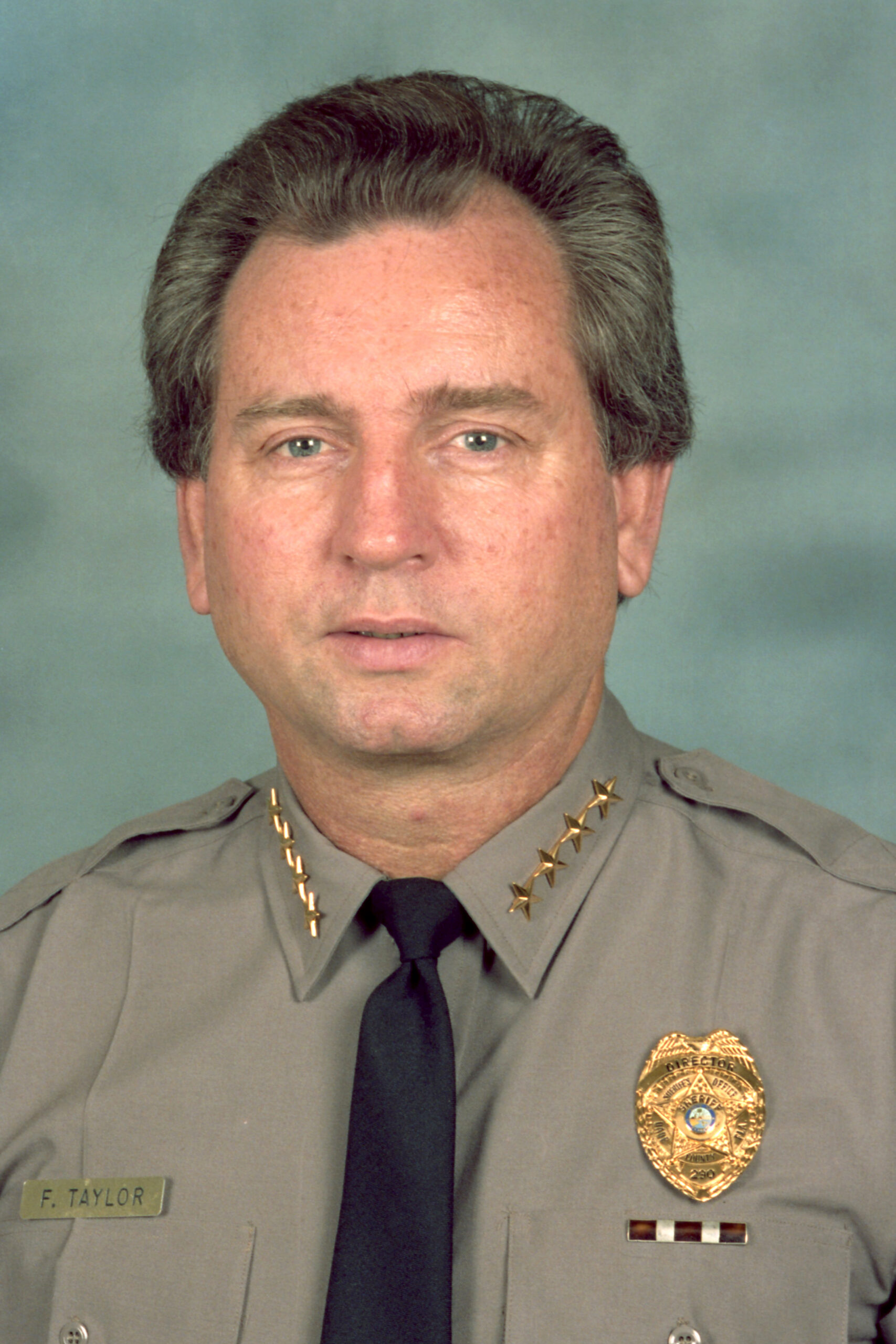
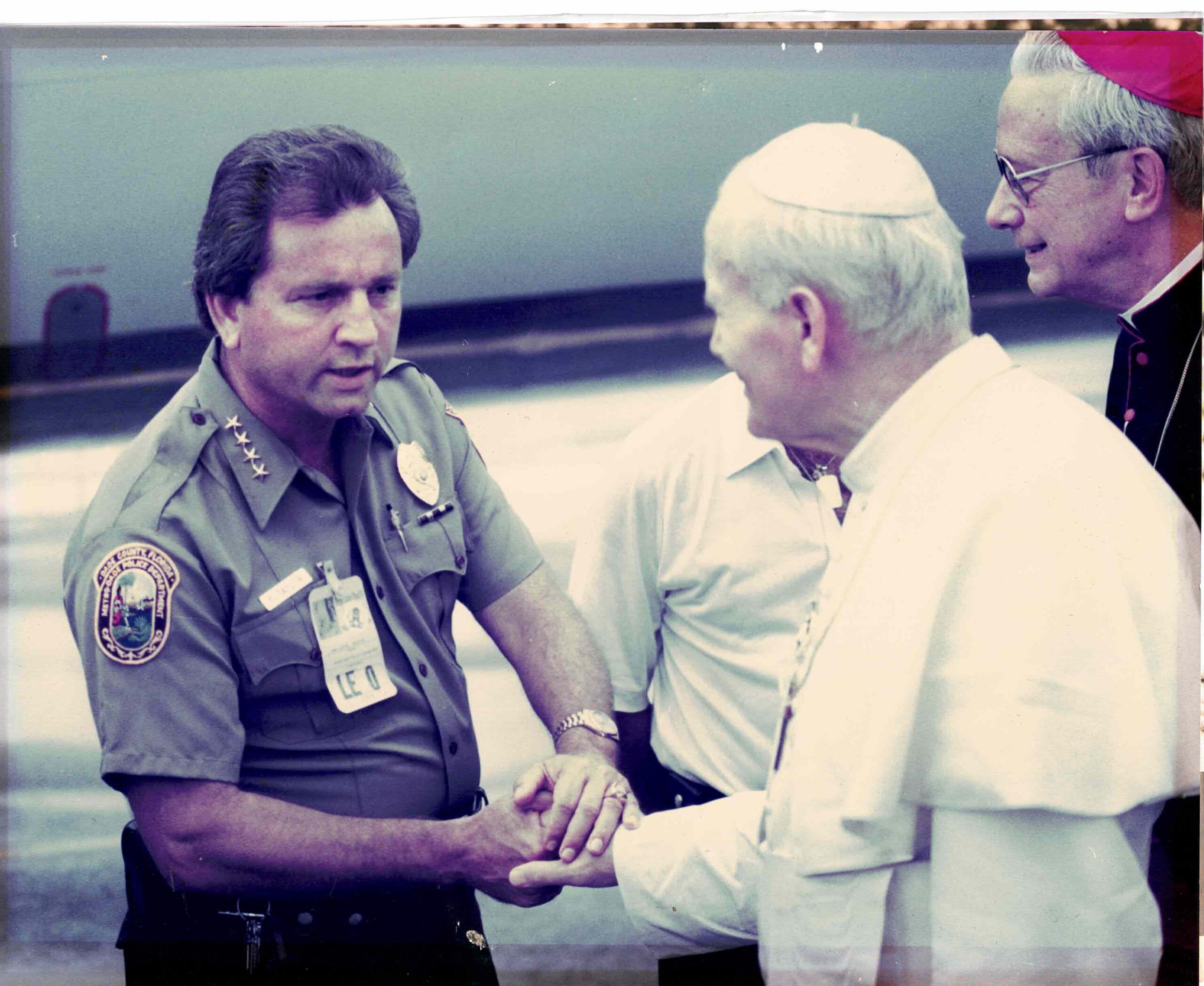
Few names in Miami-Dade law enforcement carry the institutional weight of Fred Taylor. Rising through the ranks over a career that spanned decades, Taylor served as Director of the Miami-Dade Police Department from 1986 to 1997, leading the agency during one of the most challenging and transformative periods in South Florida’s history.
Taylor assumed leadership in the years following the turmoil of the McDuffie riots and the violence associated with Miami’s infamous “Cocaine Cowboys” era, events that placed unprecedented demands on law enforcement and left a lasting imprint on the community. As Miami-Dade continued to grow and evolve, so too did the expectations placed upon its police department. Tasked with guiding one of the largest law enforcement agencies in the Southeast, Taylor oversaw a period of organizational growth, modernization, and professional development that helped shape the department’s future.
During his tenure, the department expanded its ranks and reflected the changing face of the community through increased opportunities for women and minorities within the agency. Following his retirement, Taylor remained active in civic and law-enforcement circles, continuing a commitment to public service that extended beyond his years in uniform.
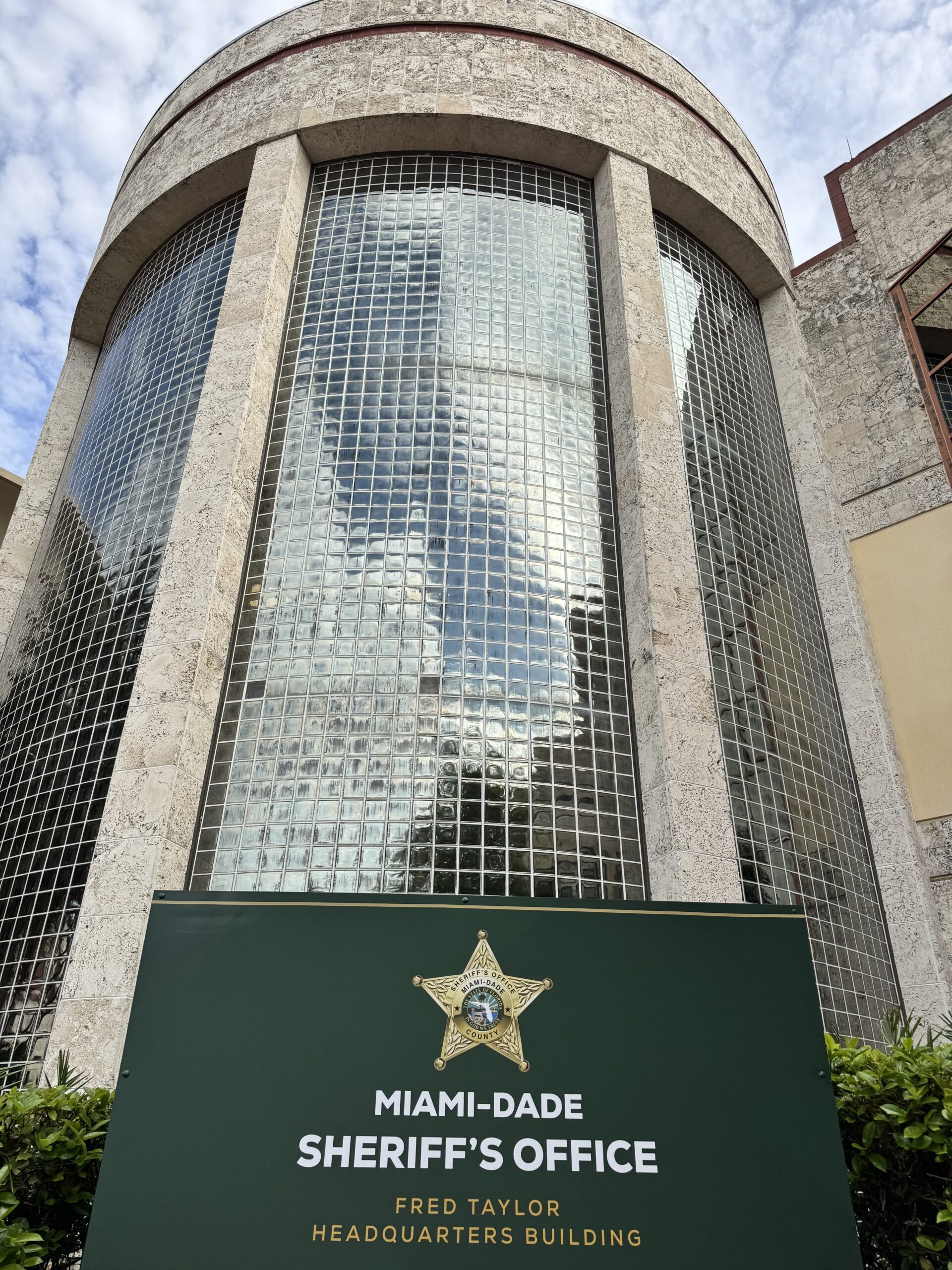
Today, his legacy is permanently linked to the department he helped lead. The Fred Taylor Miami-Dade Sheriff’s Office Headquarters Building in Doral stands as a visible reminder of his service, but his influence extends far beyond the building that bears his name. It lives on through the officers, deputies, and leaders who came up through the ranks during his administration and continue to carry forward the lessons of that era.
In this edition of Reflections, Fred Taylor looks back on the defining moments of his career, the challenges of leading during a pivotal chapter in Miami-Dade history, and the lessons that remain relevant for today’s law enforcement professionals.
We revisit those years not as history on paper, but as lived experience: what shaped the decisions, what defined leadership in that time, and what lessons remain relevant for today’s law enforcement community.
A Profession Before It Had Rules
When Taylor entered law enforcement in 1961, it was still an evolving profession. The Police Benevolent Association existed, but primarily as a social organization. That changed in 1968, when Florida law finally allowed collective bargaining for police officers.
The shift was immediate and consequential.
Overtime pay became one of the first defining battles. Officers who kept personal logs of their hours were eventually able to recover compensation; others were not. The system was inconsistent, and reform became unavoidable.
“The guys who kept notes got paid,” Taylor said simply. “Everybody else didn’t.”
Off-duty assignments were also reorganized into a centralized system, replacing informal distribution through individual stations. For the first time, access was standardized.
“It gave officers an ear they never had before,” he said of the bargaining era. “But it also changed a lot of things. Some good, some not.”
What mattered most, in his view, was not ideology but structure. The profession was beginning to define itself through rules rather than habits.
Learning the Department by Moving Through It
What kind of culture were you trying to build during your tenure as Director?
Taylor carried one idea forward from his early career into leadership: no one should understand only one piece of the organization.
“I was moved ten times to different jobs,” he said. “It helped me because I learned the department.”
As director, he institutionalized that philosophy.
He brought his senior chiefs into planning sessions with whiteboards spread across the room, mapping out the entire organizational structure. Then he made a decision that shaped everything that followed.
“We’re going to move everybody,” he told them.
Not for disruption, but for exposure.
Patrol officers rotated into detective assignments. Detectives moved into administrative roles. Command staff shifted across divisions. Even chiefs were reassigned across operational areas over time.
The reasoning was simple: familiarity creates comfort, and comfort eventually creates blindness.
“You don’t want people getting too comfortable in one place,” he believed. “You want them to understand the whole system.”
There were exceptions. Certain roles, especially in homicide, required continuity. One homicide commander, a longtime friend and colleague, Wayne McCarthy, was never moved.
“Because I probably would’ve gotten a knock on the door,” Taylor said, half-smiling. “And he might’ve shot me.”
But the exception proved the rule. That commander stayed because excellence required stability, not because the system defaulted to it.
“…He was excellent at what he did. And what he did was very, very different than other detective work.”
A City Under Pressure
How would you describe the department’s relationship with the community at the time?
Miami in the late 1960s and again into the 1980s was not a city that moved gently through crisis. When tension broke, it didn’t always spill outward, it often turned inward.
Entire neighborhoods could ignite in hours. Not just in anger, but in collapse. Storefronts that had taken years to build were broken into within minutes. Family-owned businesses, the very backbone of those same communities, were the first to go up in smoke. What started as unrest would sometimes become self-destruction, unfolding block by block under the glow of firelight and sirens.
And the police response, in those earlier years, was defined by distance.
“We would just put up a perimeter,” Taylor said, reflecting on his early days in uniform. “And let them burn it down.”
Containment was the strategy. Lines were drawn at the edges of the chaos, and officers held position while the center of it unraveled. It was, in his words, a decision shaped less by doctrine than by limitation; it was what they believed they were allowed or equipped to do at the time.
But what he saw in those moments never left him.
Years later, as Director of the Miami-Dade Police Department, he carried those images into every planning room and briefing. The question was no longer how to stand back and contain a crisis, but how to enter it before it consumed everything around it.
The answer became what he called the field force.
It was not a passive posture. It was movement.
A coordinated deployment of SWAT-trained officers, patrol units, specialized teams, and tactical resources designed to move at the first sign of escalation. Not after the damage was done, but
while it was still forming. They trained for it. They rehearsed it. They built units capable of entering disorder as a single organized presence instead of scattered response.
“The first time a riot or disturbance broke out,” Taylor said, “we would surround them and arrest everybody.”
No perimeter. No waiting. No watching it unfold from the outside.
Intervention replaced observation.
The shift was not only tactical, it was philosophical. It was a rejection of the idea that law enforcement’s role was to stand at a safe distance from chaos and document its aftermath. Instead, it positioned officers as active stabilizers of a city in motion.
And in the years that followed, he believed it changed the pattern.
“There were only a few major disturbances after that,” he said. “And most of them didn’t last long. Because if it started again, we went in and we ended it.”
The strategy behind it was consistent: identify the problem early, assign the right people, and act before the situation escalated.
Building Trust Face to Face
While operational changes reshaped enforcement, Taylor also focused on something less measurable but equally important: legitimacy.
At each police station, citizen advisory groups met monthly with command staff. Residents spoke directly to captains and majors about what they were seeing in their neighborhoods; traffic concerns, safety issues, local tensions.
“We started a relationship between the stations and the community they served,” he said.
He also created a Citizen Police Academy, bringing community members, including critics of law enforcement, directly into the structure of police training.
They observed investigations. They learned use-of-force standards, crime scene processing and so much more. They were taken into environments civilians never see.
“It was like a mini police academy… we would take them down to see an autopsy, we’d show them a murder investigation, we’d train them.”
“We showed them what we actually do,” Taylor said. “And they saw we weren’t what they thought we were.”
Even media engagement was structured differently. A weekly television program featured officers and community members discussing ongoing work and public safety issues.
“It wasn’t about defending ourselves,” he said. “It was about keeping people informed.”
A Legacy He Never Centered on Himself
What does having the Department’s Headquarters mean to you?
Years after his retirement, the Miami-Dade Police Department headquarters in Doral was renamed in his honor.
He did not expect it.
“I didn’t know anything about it,” he said.
When the resolution came before the county commission, eight members voted in favor. One opposed the measure, arguing that public buildings should not be named after living individuals.
Taylor’s response was understated.
“I don’t feel bad,” he said. “But I feel pretty good that I don’t have to be dead to have my name on the building.”
Even then, he immediately redirected credit.
“My name’s on that building,” he said, “but there’s thousands of officers that did the job.”
When asked what the honor meant to him personally, he paused only briefly.
“It didn’t change me much,” he said. “I did the right thing.”
And when asked what he would think if his name were ever removed, his answer was unchanged.
“It’d be all right.”
At 88 years old, Fred Taylor speaks with the clarity of someone who has already made peace with his career, not because it was perfect, but because it was principled.
He does not frame his legacy in titles, buildings, or milestones. He frames it in systems built, people trained, and decisions made under pressure without surrendering to convenience.
And in the end, his philosophy returns to something far simpler than policy or policing strategy.
Do the right thing.
Even when it is difficult.
Even when it is unpopular.
Even when the outcome is uncertain.
“If you do the right thing, and it turns out wrong,” his mother once told him, “That’s life. But you ought to try it first.”
For Fred Taylor, that was never just advice.
It was the job, it was his life.
Few people shape an institution. Fewer still become part of its architecture.
Fred Taylor is both.